
The Missouri River reservoirs in South Dakota are complex and dynamic fisheries. While they share certain characteristics, there are many elements that make these fisheries unique as well. We highlighted the three main reservoirs: Lake Oahe, Lake Sharpe, and Lake Francis Case in A Comprehensive Guide to Fishing on the Missouri River in South Dakota.
While this follows the general trends, hot bites, and good spots to try throughout each season, there is much to cover for each of these fisheries. This is why each of these waterbodies deserves its own feature, and this one highlights the action fishery that is Lake Sharpe.
Biggest Factor: Current
The biggest factor to consider when fishing on Lake Sharpe is current. Sitting between the larger reservoirs of Lake Oahe and Lake Francis Case, Lake Sharpe features more riverine features throughout the majority of the reservoir. This means anglers can expect to find current, shallower water, and features such as sandbars and submerged tree flats across much of the waterbody.
Sitting below Oahe Dam, the flowing water is critical for the upper 15-20 miles of the reservoir. This current prevents ice build up, which means open water fishing from the boat is often present throughout the winter depending on weather patterns. During this time, the sandbars sitting between the bridges in town are the most popular options, and these areas can produce throughout the entire open water season because of the constant flow of current.
As open water fishing progresses, a strong bite can be found further down the reservoir as well. This includes the Farm Island Recreation Area, Fort George Lakeside Use Area, and De Grey Lakeside Use Area. Through this entire area anglers can expect to find large flats, sand bars, and submerged tree patches. From the Oahe Dam to down to nearly Joe Creek Recreation Area, current is going to play the biggest part on the type of bite at any given time.
The current will dictate the bite in this area, with periods of high flows producing strong fishing and lower flows slowing the bite down. This is true throughout every month of the open water season, and this can lead to specific bite windows that emerge. Generally speaking, the best bite is right as the current picks up in the morning hours and the water begins to rise, but if the current is flowing a strong bite can often be had throughout the entire day.
Throughout the upper end of the reservoir in particular, anglers should expect to see the water levels fluctuate throughout the day because of this current as well. Oahe Downstream Recreation Area, Fort Pierre City Boat Ramp, Downs Marina, Polo Fields Boat Ramp (Farm Island Recreation Area), and LaFramboise Island Recreation Area/Causeway Boat Ramp are where this is most evident.
In the mornings, the water level is often at its lowest point. When the current turns on, the reservoir will begin to rise and this will continue up until the current turns off or decreases, often in the evening or early night hours. Anglers should be aware of these fluctuating water levels, as it both can impact fishing and navigation on the reservoir.
Current becomes less of a factor once reaching the West Bend Recreation Area, and here anglers can expect more lake style fishing. While current, particularly in high flow days, can impact this area, for the most part the fishing is more consistent as it does not experience the drastic changes current can bring further up the reservoir.

Key Consideration: Water Clarity
While current sets the tone for the fishery, another key consideration anglers need to be mindful of is water clarity. Water clarity is particularly important on both Lake Sharpe and Lake Francis Case, especially in the early season. Finding clear water is essential for finding the best bite.
The Bad River is the most impactful tributary to Lake Sharpe and sits in Fort Pierre directly above the bluffs. When experiencing high run off, heavy rains, or upstream flooding events this river can bring incredibly dirty water into the fishery. This can dirty the entire waterbody below in, essentially grinding any bite to a halt. While there are other tributaries along the fishery, none are more impactful than the Bad River when it comes to water clarity.
The key to finding the best bite on Lake Sharpe is finding the clearest water. If the water is clear throughout the fishery, expect the current to be the major factor and all of these areas to be productive. If the water is dirty, particularly below the Bad River, the bulk of the fishing will have to focus either upstream of the Bad River or down near or below the West Bend area.

Primary Forage: Gizzard Shad
The primary forage, and really the dominant forage, in Lake Sharpe is gizzard shad. Gizzard shad can be found throughout the entire reservoir. Hipple Lake in particular is a major over-winter survival location, and in turn spawning location, for gizzard shad but other areas such as below Capitol Creek in LaFramboise Island, and further down near Joe Creek and Iron Nation can all produce strong numbers of gizzard shad.
Gizzard shad spawn once water temperatures reach 55 degrees, and can continue to spawn until they fall below this temperature threshold. This means that there can be multiple classes, and in turn sizes, of gizzard shad produced throughout the summer months. This means there is a steady supply of forage for walleye of all sizes, and that shad size can fluctuate from very small to relatively large by the fall.

Fishery Type: Action/Numbers
The combination of steady current, abundant gizzard shad, and ideal spawning habitat makes Lake Sharpe a walleye factory. Known for being a numbers fishery, Lake Sharpe features an abundance of 15-18 inch walleyes, as well as numerous smaller fish as well.
While anglers can expect constant bites, getting those larger fish can be a bit of a challenge. Gizzard shad can grow fish extremely quickly, with walleyes reaching approximately 15 inches by age 3. However, once fish get to about 20 inches there is not a larger bodied prey fish for them to switch to and continuing growing, such as like on Lake Oahe.
There can be some cold water forage options in the Oahe Dam tailrace, as smelt and ciscoe can be flushed through the dam. Similarly, juvenile white bass, yellow perch, and crappies can all present options in Hipple Lake within Farm Island Recreation Area too. However, for the most part throughout the fishery gizzard shad are the most abundant and most available forage base.

Best Baits
The best baits on Lake Sharpe are going to vary by season and presentation. For the most part, traditional livebait options and standard shad style crankbaits are going to be the best bet.
Pitching jigs and minnows is the most productive option in the winter, spring, and late fall, with a ⅛-3/16 oz jig being the best option depending on the current and wind. The key is to allow the bait to float with the current, while still maintaining bottom contact and feel. Larger plastics can also be productive, as they provide a larger profile for fish looking for bigger meals.
Trolling crankbaits can also be productive, particularly in the spring prior to the vegetation growing throughout the summer months. Once this occurs, bottom bouncing throughout the summer and the fall is the most productive method, with trolling crankbaits offering an option again later in the fall season.
Best options for trolling crankbaits are #5 and #7 Berkley Flicker Shads and Rapala Shad Raps. Berkley Money Badgers can also be effective, as can Salmo Hornets. Emulating the gizzard shad is the most important element, and what makes these baits so effective. The best colors are blue, purple, white, and green.

The Oahe Dam tailrace area can also produce very good shore fishing, particularly throughout the summer months and then especially in the fall. Here the best options are Berkley Shallow Money Badgers, Rapala Shallow Shad Raps, and Rapala Husky Jerks. Jigs and plastics, such as Berkley GULP! Minnows or Berkley Power Minnows can also produce, although can be more limited by current conditions from the dam.
When bottom bouncing, 1 ½ to 3 ounce bottom bouncers are best considering the current and wind. Fishing a Mack’s Lure Smile Blade or Colorado Blade are the top options, pairing these with nightcrawlers. The best size for a Smile Blade is .8”, and #2, #3, or #4 Colorado blades are the best choice. White, silver, pink, purple, and blue are all the top options for blades, while gold and orange can also produce.

Under the Radar Spot: Hipple Lake
One of the most under the radar spots on Lake Sharpe is Hipple Lake, which can offer very good fishing beginning about Memorial Day and continuing through the fall months. This area is a shallow, oxbow lake connected to Lake Sharpe and only accessible via Farm Island Recreation Area. The area is very shallow, mostly under 7 feet, and the water is turbid throughout the entire open water season.
Anglers can expect to find decent numbers of walleye, with most 15-18 inches. However, this is one of the highest percentage areas to catch an “over” or fish greater than 20 inches on Lake Sharpe. Generally speaking, Hipple Lake is one of the best places to consistently catch 18-23 inch walleyes and the possibility for a larger one exists too.
Hipple Lake also has good numbers of crappie, white bass, northern pike, and channel catfish. Gizzard shad are a primary forage, but juvenile white bass also are a key factor for big walleyes in particular. This creates a unique and diverse fishery within Lake Sharpe.

Other Species to Target
In addition to walleye, there are a number of other species present in Lake Sharpe as well. Smallmouth bass fishing on the lower end of the reservoir is very good, especially from West Bend Recreation Area down to the face of Big Bend Dam. The deeper, clearer water and rocky areas are home to a very quality population of smallmouth bass.
Channel catfish can be found throughout the reservoir in very good numbers, with fish reaching trophy caliber sizes as well. Anglers can target these from both the boat and shore and expect to find very good fishing.
Crappie are present on the lower end of the reservoir near Joe Creek Lakeside Use Area, and also in Hipple Lake. Year classes can vary, but when crappie numbers are up the fishing can be quite good.
Northern pike are found predominantly in Hipple Lake and within LaFramboise Island. These areas have the most submerged vegetation and weeds, and have minimal current. Pike are present in low numbers, but there are some quality fish into the upper 20s to mid 30 inch ranges that can be caught.

Overall, Lake Sharpe is one of the best action fisheries in the Midwest. Anglers should expect plenty of bites, a wide range of species to catch, and the chance at a larger, trophy caliber fish as well. Lake Sharpe is a fun and complex fishery, and should be on every anglers list to check out!

Everything to Know About Fishing the Missouri River in South Dakota
The Missouri River in South Dakota is one of the best fishing spots in the Midwest, and the bite transitions up and down the river throughout each season. Whether you’re looking to catch a trophy walleye, fill a limit for a fish fry, or just want to feel a tug at the end of the line we have everything you need to know in A Comprehensive Guide to Fishing on the Missouri River in South Dakota.

Everything to Know About Fishing Lake Oahe
Lake Oahe is a massive waterbody, spanning two state capitols, routinely reaching depths over 100 feet, and featuring numerous tributaries. While the fishery can appear challenging, the reward can be truly the trophy of a lifetime. Whether you’re looking for one for the wall or a fish fry, we have everything you need to know to find fish on Lake Oahe in The Complete Guide to Fishing Lake Oahe.

Everything to Know About Fishing Lake Francis Case
One of the most popular walleye fishing spots in the spring time, if not the most popular, Lake Francis Case and the Chamberlain area draws anglers from across the region each spring. There’s more than just great spring walleye fishing though, find out where to follow the fish on Lake Francis Case all season long in The Complete Guide to Fishing on Lake Francis Case.

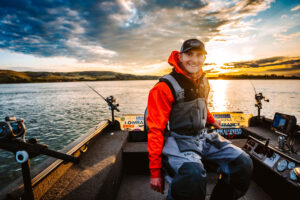

[…] Lake Sharpe is a true action fishery, with numerous walleyes between 15-18 inches providing a great opportunity for a fish fry and a number of shorter fish to provide entertainment throughout the day. Find out how to find fish on Lake Sharpe in The Complete Guide to Fishing on Lake Sharpe. […]