
The Missouri River reservoirs in South Dakota are large and complex fisheries, and none meets these qualifications more than Lake Oahe. Stretching across two states and connecting two capitals, Lake Oahe is expansive, deep, and features numerous elements within the reservoir.
We highlighted the three main reservoirs: Lake Oahe, Lake Sharpe, and Lake Francis Case in A Comprehensive Guide to Fishing on the Missouri River in South Dakota. While this follows the general trends, hot bites, and good spots to try throughout each season, there is much to cover for each of these fisheries. This is why each of these waterbodies deserves its own feature, and this one highlights the massive fishery that is Lake Oahe.
Biggest Factor: Biology of the Fishery
The walleye population itself is highly variable, based on the flows from the waterbody. Periods of lower water years, which allows vegetation to grow on the shoreline, followed by a high water event that allows fish to use that vegetation for nursery habitat leads to high numbers of walleye abundance. Conversely, low water years or dropping water periods are often less productive. In short, a cycle of high and low is best, which is also why the fishery is boom or bust!
The forage within the fishery is just as important. Three forage species: gizzard shad, rainbow smelt, and ciscoe are all present within the system. Gizzard shad are maintained through stockings by South Dakota Game, Fish and Parks fisheries staff, and ciscoe and smelt numbers see an inverse relationship.
Gizzard shad provide an excellent food source for walleyes less than 20 inches, and can grow fish very quickly. While gizzard shad can occur throughout Lake Oahe depending on the winter and water conditions, consistent populations are maintained through trap and transfer efforts from Hipple Lake within Lake Sharpe.
Rainbow smelt naturally occur in Lake Oahe, and similar to gizzard shad provide an excellent food source for walleye less than 20 inches. Contrary to gizzard shad, which are a warm water species, smelt prefer colder water temperatures.
Ciscoe are a larger bodied prey species, and while they do not offer a food source for smaller walleye, they are an excellent option for larger walleye. In fact, these are the main food source for the trophy caliber walleyes that Lake Oahe is known for.
Learn More: Lake Oahe – A Trophy Walleye Factory
It is important to note that smelt and ciscoe have an inverse relationship. When smelt numbers are booming, ciscoe numbers will be depressed. When smelt numbers are down, ciscoe numbers will then increase. This is because ciscoe spawn in late fall while smelt spawn in early spring, so when smelt numbers are high, smelt will be moving in and preying on these newly hatched ciscoe.
The special attention to the biology of the fishery for Lake Oahe specifically is no accident, it is critical for anglers to understand exactly how this unique system functions. There will be days that produce a quick limit, there will be days that produce one fish, but it’s a giant, and there will be days that are downright difficult fishing. This is the beauty of such a special and complex fishery.

Key Consideration: Seasonal Trends and Movements
To increase the odds of one of the first two outcomes, doing your homework on the fishery is key. Fortunately, we’re here to help! The spring time is spawn time, and fish will concentrate in one of the three major tributaries: the Grand River, the Moreau River, or the Cheyenne River. There will also be a number of fish that move up into North Dakota and spawn near Bismarck or Beaver Bay. There are other tributaries, such as Oak Creek, Okobojo Creek, Chantier Creek, and other smaller creeks that will hold resident populations of fish for spawning though in far less number.
As the calendar flips to May, fishing on the upper end of the reservoir begins to really pick up. Spawning activities will be complete and fish will be on the move as they begin again to focus on feeding. The Grand River and Moreau River will both still be high percentage areas, but looking on the flats adjacent to these areas is also positive.
This time of year both trolling crankbaits and bottom bouncing can be effective. Trolling crankbaits often is better for fishing the larger, expansive flats, where bottom bouncing is best for fishing the smaller points, shorelines, and inside turns.
By June, the fishing on the lower end of the reservoir is starting to heat up as well. It’s at this time of year that anywhere between Mobridge and Pierre anglers can expect to catch fish, with the Grand River down to the Cheyenne River the highest percentage areas. Fishing out of Indian Creek Recreation Area, Swan Creek Recreation Area, West Whitlock Recreation Area, Sutton Bay Lakeside Use Area, Bushes Landing Lakeside Use Area, or Little Bend Recreation Area can all be highly productive.
Learn More: Early Summer Walleyes on Lake Oahe

Trolling crankbaits continues to be productive, and anglers should not shy away from using large-bodied minnow style crankbaits. The presence of rainbow smelt, ciscoe, and juvenile yellow perch means that walleyes are keying on these profiles, and anglers should not be afraid to use larger sizes such as #9 and #11.
Learn More: Locating and Patterning Lake Oahe Summer Walleye

By July, and through the rest of the summer and into September, deeper water becomes the name of the game. Trolling crankbaits on leadcore line can be effective, and this is the time that livescoping is a game changer as well. Fishing adjacent to points, humps, or other main lake structure is often the most successful. Deep submerged timber also becomes a very high percentage area for both good numbers and large walleyes too.
Learn More: Mid-Summer Walleyes on Lake Oahe

Beginning in October, and until ice up, the bulk of the fishing will again concentrate between West Whitlock Recreation Area near Gettysburg, Swan Creek Recreation Area near Akaska, and Indian Creek Recreation Area near Mobridge. The submerged trees make for an ideal area to both target crankbaits and livescope, and there will also be fish holding on the large main lake flats as they move through the reservoir.

Best Baits
Berkley Flicker Minnows, Rapala Tail Dancers, and Walleye Nations Creations Reapers are all popular choices. Bigger shad style baits, such as a #9 Rapala Shad Rap or Berkley Flicker Shad can also be effective. Blue, purple, and white are all good colors to start with, but don’t be afraid to fish louder by using brighter colors. The water is very clear, but this does not mean fish will shy away from aggressive baits.
The same is true with bottom bouncing, fishing aggressively with #3 or #4 Colorado blades tipped with crawlers is the most effective. Fish can often be found shallow, still between 6-15 feet, and fishing the windblown shorelines is the best approach. On calm days with high sun, fishing slightly deeper with .8” Mack’s Lure Smile Blades or a plain hook and crawler can produce bites, albeit slower fishing should be expected.

Anglers packing for a trip on Lake Oahe should not shy away from big baits, as these often produce the biggest bites. A 12-17 pound fluorocarbon leader is also a good choice, particularly on Lake Oahe as the probability of encountering a large northern pike or even a salmon is always there.
Other Species to Target
Speaking of salmon, Lake Oahe offers one of the unique opportunities to target chinook salmon on the prairie. The cold water near the face of the Oahe Dam, as well as deep water throughout the lower end of the reservoir, holds a strong population of salmon that feed on the cold water forage.

Anglers will also find a quietly fantastic smallmouth bass fishery, with both good numbers of fish and great quality fish present. Trophy caliber northern pike can also be caught, as well as a quality crappie, yellow perch, and channel catfish fishery.

Everything to Know About Fishing the Missouri River in South Dakota
The Missouri River in South Dakota is one of the best fishing spots in the Midwest, and the bite transitions up and down the river throughout each season. Whether you’re looking to catch a trophy walleye, fill a limit for a fish fry, or just want to feel a tug at the end of the line we have everything you need to know in A Comprehensive Guide to Fishing on the Missouri River in South Dakota.

Everything to Know About Fishing Lake Sharpe
Lake Sharpe is a true action fishery, with numerous walleyes between 15-18 inches providing a great opportunity for a fish fry and a number of shorter fish to provide entertainment throughout the day. Find out how to find fish on Lake Sharpe in The Complete Guide to Fishing on Lake Sharpe.

Everything to Know About Fishing Lake Francis Case
One of the most popular walleye fishing spots in the spring time, if not the most popular, Lake Francis Case and the Chamberlain area draws anglers from across the region each spring. There’s more than just great spring walleye fishing though, find out where to follow the fish on Lake Francis Case all season long in The Complete Guide to Fishing on Lake Francis Case.

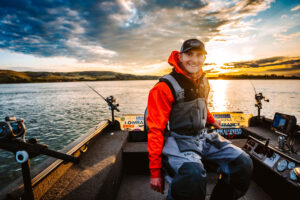

[…] Lake Oahe is a massive waterbody, spanning two state capitols, routinely reaching depths over 100 feet, and featuring numerous tributaries. While the fishery can appear challenging, the reward can be truly the trophy of a lifetime. Whether you’re looking for one for the wall or a fish fry, we have everything you need to know to find fish on Lake Oahe in The Complete Guide to Fishing Lake Oahe. […]
[…] Lake Oahe is a massive waterbody, spanning two state capitols, routinely reaching depths over 100 feet, and featuring numerous tributaries. While the fishery can appear challenging, the reward can be truly the trophy of a lifetime. Whether you’re looking for one for the wall or a fish fry, we have everything you need to know to find fish on Lake Oahe in The Complete Guide to Fishing on Lake Oahe. […]
[…] Lake Oahe is a massive waterbody, spanning two state capitols, routinely reaching depths over 100 feet, and featuring numerous tributaries. While the fishery can appear challenging, the reward can be truly the trophy of a lifetime. Whether you’re looking for one for the wall or a fish fry, we have everything you need to know to find fish on Lake Oahe in The Complete Guide to Fishing on Lake Oahe. […]