
The Missouri River reservoirs in South Dakota offer some of the best walleye fishing in the Midwest, and as spring begins the first open water opportunities of the season draws anglers from across the region to Chamberlain, South Dakota to fish on Lake Francis Case.
While springtime in Chamberlain is a major draw to start the season, the fishing along the Missouri River is very good throughout the entire year. In A Comprehensive Guide to Fishing the Missouri River in South Dakota, learn how to follow the bite all season long. There’s of course more to be learned about these fisheries, and we’ll take a deep dive into Lake Francis Case.
Biggest Factor: Water Clarity
The most important factor when fishing on the Missouri River is finding clear water. The best bite is often found in the clearest water, and particularly in the spring this is even more important. However, in recent years water clarity has played a role in the bite throughout the summer for a different reason.
In the spring time, major tributaries like Crow Creek and the White River play a major role in water clarity. While these areas can provide warm water, and in turn draw fish, the water can also be incredibly dirty. When the water is straight mud, finding the clearer water is often the better choice.
Clear water throughout the reservoir can result in a good bite up and down the system, but high winds, rains, or late season snows can all play a major factor in the clarity. The clearest water is often coming directly out of Big Bend Dam in Fort Thompson, which means focusing on the furthest north portion of the reservoir is generally the best choice. However, recent weather is the most important factor when it comes to determining the best water clarity and there is no better judge than an angler on the water.
While water clarity is a well-known aspect of spring fishing especially in the Chamberlain area, one aspect that’s been a recent development is the increased water clarity due to the presence of zebra mussels. Zebra mussels were discovered in 2019, and in recent years anglers fishing in the Platte area and down towards the face of Fort Randall Dam in Pickstown have reported difficult fishing, particularly in the summer months.
Traditionally, popular locations such as Red Rock and Two Johns drew many anglers, who could enjoy a bottom bouncing bite well into July. However, in recent years this bite has been drastically slowed, often around Father’s Day in mid-June. There’s a few factors that go into this.
The increased water clarity has allowed weed growth to occur in areas and depths that haven’t yet been seen in the system. This has naturally moved both forage and fish a bit deeper, and has also pushed fish to areas that they can find more comfort from the sunlight. These areas, specifically in the Platte Area and down closer to Pickstown, are large submerged tree flats. In these areas, walleyes can enjoy deeper, cooler water, ample forage, and the shade and comfort from these full grown trees underneath the water.
Finding clear water is essential for enjoying the spring bite, but understanding how to address clear water is even more essential in the summer. Regardless when and where you fish on Lake Francis Case, understanding water clarity is the biggest factor to success.

Key Consideration: Finding Your Own Fish
There are several popular community spots on Lake Francis Case, especially in the spring time, and when there are hundreds of boats on the water fishing can get tough. Dragging jigs through a crowd of boats is one thing, but when it comes to trolling this can be an impossible task. When the stilling basin, Crow Creek, Kiowa Flats, Carpenter Bluffs, Pontoon Bay, and White River fills up, those that have found their own spots are often most successful.
A bit further boat run can quickly find new territory, and areas that look similar to these community spots can be just as effective. The old saying “90% of the fish are in 10% of the water” is true, but there’s far more to that 10% than many anglers may realize. Finding shallow areas adjacent to deep water will often hold fish, and covering water will help reveal these productive locations.
As the summer moves on, while the concentration of anglers will not be like what it was in Chamberlain, Lake Francis Case remains a popular fishery. By June, if not even earlier, most of the fishing has transitioned down from the Chamberlain area towards the Platte area. This doesn’t mean there aren’t fish to be caught in Chamberlain though.
While not in as many numbers, there is a good population of fish that do remain in the area. Crow Creek, Kiowa Flats, Oacoma Flats, and the White River will all still hold decent numbers of fish. There will also be a developing bite in the Big Bend Dam tailrace, with some of the biggest fish in the system enjoying the cooler water and constant supply of food throughout the summer.
There are plenty of flats, points, submerged trees, and tributaries along the fishery. Exploring them all will help you find a great bite, enjoy it yourself, and make the day that much more rewarding.

Primary Forage: Gizzard Shad
Similar to Lake Sharpe, the primary forage found within Lake Francis Case is gizzard shad. As summer begins and the water warms to 55 degrees, shad will continue to spawn throughout the reservoir and will continue until fall temperatures take hold.
This means there will be an abundance of gizzard shad of different sizes throughout the system, providing a food source for walleyes from all sizes. While gizzard shad grow fish quickly, reaching sizes of approximately 15 inches by age-3, they do not offer a larger body prey fish for walleyes to switch to when they reach about the 20 inch mark. Similar to Lake Sharpe, this means the majority of the fish are 15-18 inches, though there can be some larger fish to be caught as well.
Fishery Type: Action/Numbers
The steady recruitment and constant supply of gizzard shad is water makes Lake Francis Case the poster child of the term “walleye factory.” Indeed, the fishery continues to put out an ample supply of 15-18 inch fish, with plenty of shorter fish as well.
The deeper water and larger reservoir does set up for a bit more larger caliber fish than the smaller and shallower reservoir in Lake Sharpe up above, with many of these fish staying in the Platte area and further down as they enjoy the deep water. The large tributaries of Snake Creek and Platte Creek provide spawning habitat, meaning many of these larger fish have no need to leave the middle to lower portion of the reservoir.
Anglers should expect predominantly “eater” caliber fish, but the chance at a larger one is always present as well. Walleyes over 8 pounds, while uncommon, are certainly possible anytime fishing the reservoir.

Best Baits
One of the most common ways to target fish on Lake Francis Case in the spring time is by dragging jigs with minnows. Good sizes to do this are ¼-½ oz jigs, which allows anglers to maintain bottom contact in both current and wind.
Pitching jigs can also be effective, and a ⅛-3/16 oz jig is the best option for these presentations. Minnows are the most consistent, but plastics can be just as productive if not more depending on the day. Larger profile plastics, such as a 4 inch Berkley GULP! Minnow or Berkley 4” Ripple Shad can be best.
Trolling crankbaits is also a proven method throughout the open water season, and #5 and #7 Berkley Flicker Shad and Rapala Shad Raps are a top choice. Another solid option is a #5 or #7 Berkley Flicker Minnow, which tends to target larger fish in the spring time with a bit more aggressive action yet still small profile.
As summer goes on, staying consistent with the #7 sizes are best. Rapala Shad Raps, Shad Dancers, and Tail Dancers can all be particularly effective fishing deeper, clearer water in the warm weather months. Blue, purple, and silver are all effective.
Bottom bouncing is best done with a natural colored Colorado blade or Mack’s Lure Smile Blade. A #3 Colorado blade provides a bit more flash and attention to a nightcrawler, making it a top choice for standing out from the rest of the forage in the summer months and into the fall. A .8” Mack’s Lure Smile Blade can provide a more toned down presentation, appealing to more neutral fish when the bite is slower.
Casting the Big Bend Dam tailrace can also be effective, especially in the summer and fall, and #7 Rapala Shallow Shad Raps are the top option for this. Purpledescent, Blue, and Hot Steel are the top three colors to target, but Firetiger can also be effective too.

Under the Radar Spot: Oacoma Flats
When launching out of Cedar Shore Resort or American Creek Marina, many anglers will run towards the community spots of Crow Creek, Kiowa Flats, or the White River. Many of these boats that head south from Chamberlain towards the White River run past a productive big fish spot, Oacoma Flats.
While not in great numbers, Oacoma Flats offers a resting area for big fish moving up and down the river to spawn. Being adjacent to deep water, this area makes a nice rest stop for fish to feed as they see fit. This makes it an ideal trophy caliber spot in the spring bite and a great place to stop and try once a limit is in the boat.
The same factors also make this a very good summer location, with the current, adjacent deep water, and forage all making an ideal spot for summer walleyes. Fish will be moving on and off the flats to feed, which makes checking the spot throughout the day to see if fish have moved on yet and are ready to feed.

Other Species to Target
The Missouri River has been described as one of the most underutilized channel catfish fisheries in the Midwest, and there is truth to this statement. The channel catfish fishing is very good, with great numbers of fish and large fish to be caught. Anglers targeting catfish are in for truly spectacular fishing.
The smallmouth bass fishing can be very good as well, particularly on the lower end of the reservoir. However, there can be quality smallmouth bass caught along the rocky grades within Chamberlain. This makes for a fun casting bite that can produce white bass as well.
The most incredible species in Lake Francis Case requires a special license to target, the only fish in South Dakota that has a limited draw license, and this is the paddlefish. Paddlefish season is open the month of May for South Dakota residents who successfully obtain a license through a limited draw process. These unique species are a conservation success story, and whether fishing for them or you view them when fishing is truly remarkable.

Lake Francis Case is one of the most popular fisheries in the Midwest, and deservedly so. The spring bite kicks the open water season off for many walleye anglers, and the bite remains strong throughout the reservoir throughout the summer. Staying on top of changing conditions, knowing the impact of forage, and finding your own spots is the key to success on this fishery.

Everything to Know About Fishing the Missouri River in South Dakota
The Missouri River in South Dakota is one of the best fishing spots in the Midwest, and the bite transitions up and down the river throughout each season. Whether you’re looking to catch a trophy walleye, fill a limit for a fish fry, or just want to feel a tug at the end of the line we have everything you need to know in A Comprehensive Guide to Fishing on the Missouri River in South Dakota.

Everything to Know About Fishing Lake Oahe
Lake Oahe is a massive waterbody, spanning two state capitols, routinely reaching depths over 100 feet, and featuring numerous tributaries. While the fishery can appear challenging, the reward can be truly the trophy of a lifetime. Whether you’re looking for one for the wall or a fish fry, we have everything you need to know to find fish on Lake Oahe in The Complete Guide to Fishing on Lake Oahe.

Everything to Know About Fishing Lake Sharpe
Lake Sharpe is a true action fishery, with numerous walleyes between 15-18 inches providing a great opportunity for a fish fry and a number of shorter fish to provide entertainment throughout the day. Find out how to find fish on Lake Sharpe in The Complete Guide to Fishing on Lake Sharpe.

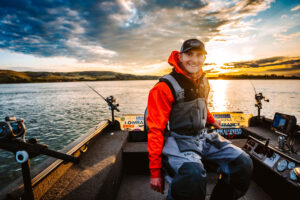

[…] One of the most popular walleye fishing spots in the spring time, if not the most popular, Lake Francis Case and the Chamberlain area draws anglers from across the region each spring. There’s more than just great spring walleye fishing though, find out where to follow the fish on Lake Francis Case all season long in The Complete Guide to Fishing on Lake Francis Case. […]